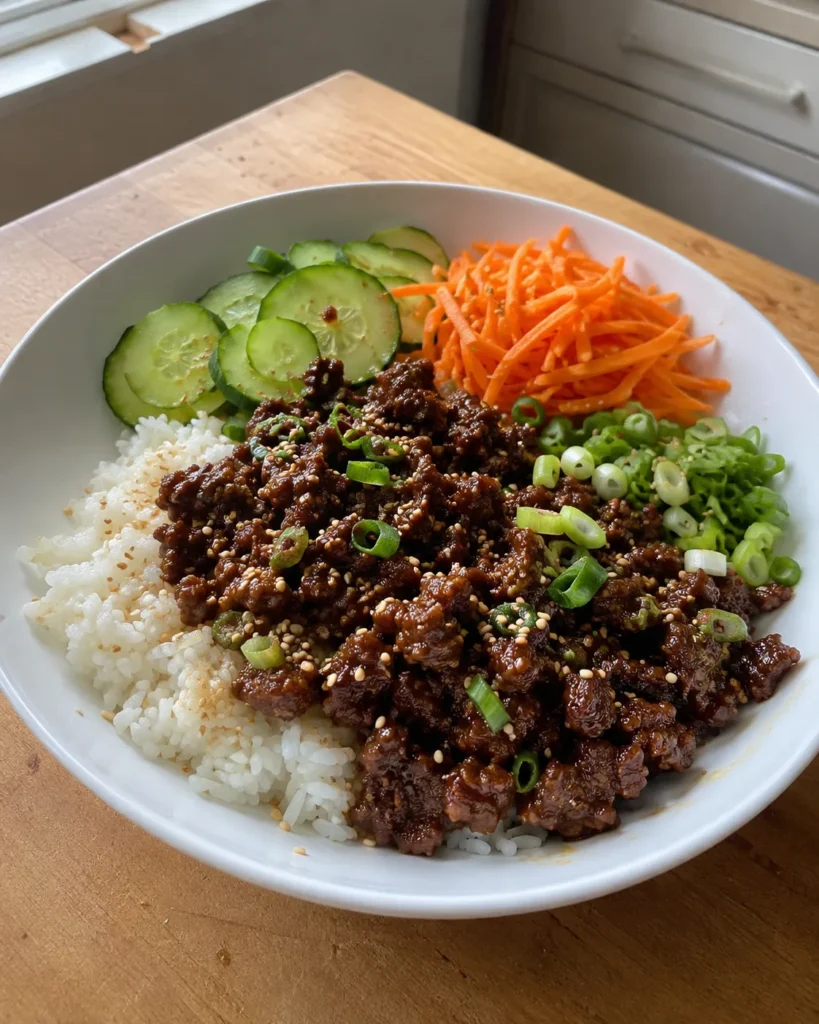
Korean Ground Beef Bowl is a fast, Korean-inspired dinner made with browned beef, a glossy soy-gochujang sauce, warm rice, and crisp vegetables. The flavor lands between savory, lightly sweet, garlicky, and gently spicy, with crisp cucumber and carrot for contrast.
It is ready in 20 minutes, uses one skillet, and has adjustable heat. Save or print this recipe for busy nights when you want a complete meal without a long ingredient list.
Quick this Korean Ground Beef Bowl Snapshot
| Detail | Information |
|---|---|
| Prep time | 10 minutes |
| Cook time | 10 minutes |
| Total time | 20 minutes |
| Servings | 4 |
| Serving size | 1 bowl |
| Difficulty | Easy |
| Cooking method | Stovetop skillet |
| Flavor | Savory, lightly sweet, garlicky, gently spicy |
| Texture | Caramelized beef, fluffy rice, crisp vegetables |
| Best for | Weeknight dinner and meal prep |
Table of Contents
Table of Contents
Why You’ll Love This Korean Ground Beef Bowl
- It cooks in one skillet in about 10 minutes.
- No marinating is required.
- It combines rice, protein, and vegetables.
- Gochujang adds warmth and depth without making the bowl aggressively hot.
- Toppings are flexible.
- The beef reheats well.
Ingredients and Why They Matter
Lean ground beef provides richness and protein without excessive grease. Reduced-sodium soy sauce adds savory depth, while brown sugar helps the sauce glaze.
Gochujang is a fermented Korean chile paste with sweet, savory heat. Garlic and ginger add aroma, rice vinegar adds brightness, and sesame oil provides a nutty finish. Add sesame oil after cooking so its fragrance stays noticeable.
| Main Ingredient | Purpose | Nutrition Contribution | Best Substitution |
| Lean ground beef | Main savory filling | Protein, iron, fat | Ground turkey |
| Reduced-sodium soy sauce | Seasons and adds umami | Sodium and some protein | Tamari |
| Brown sugar | Balances salt and helps glazing | Added carbohydrate and sugar | Honey |
| Gochujang | Adds chile warmth and fermented depth | Sodium and carbohydrate | Sriracha with mild miso |
| Cooked rice | Forms the bowl base | Carbohydrates | Brown rice or quinoa |
| Cucumber | Adds cool crunch | Water, fiber, vitamin K | Shredded cabbage |
| Carrot | Adds sweetness and color | Fiber and beta-carotene | Bell pepper |
| Sesame oil | Adds toasted aroma | Dietary fat | Omit if necessary |
For the full recipe, use 1 pound 90/10 ground beef, 3 tablespoons reduced-sodium soy sauce, 2 tablespoons packed brown sugar, 1 tablespoon water, 2 teaspoons gochujang, 3 minced garlic cloves, 2 teaspoons grated ginger, 1 teaspoon rice vinegar, and 1 teaspoon toasted sesame oil.
Serve the Korean Ground Beef Bowl with 3 cups cooked rice, sliced cucumber, shredded carrot, scallions, and sesame seeds.
How to Make Korean Ground Beef Bowl
- Prepare the sauce. Whisk the soy sauce, brown sugar, water, gochujang, garlic, ginger, and rice vinegar in a small bowl until smooth.
- Heat the skillet. Place a wide skillet over medium-high heat. Add the ground beef and press it into a fairly even layer. Leave it undisturbed for 2 minutes to develop brown edges.
- Brown the beef. Break it into crumbles and cook for 3–4 minutes until no raw-looking sections remain. Drain excess grease if more than a thin coating collects in the skillet.
- Check the temperature. Ground beef should reach 160°F on a food thermometer; color alone is not a dependable safety test. Consult the USDA safe minimum internal temperature chart when checking doneness.
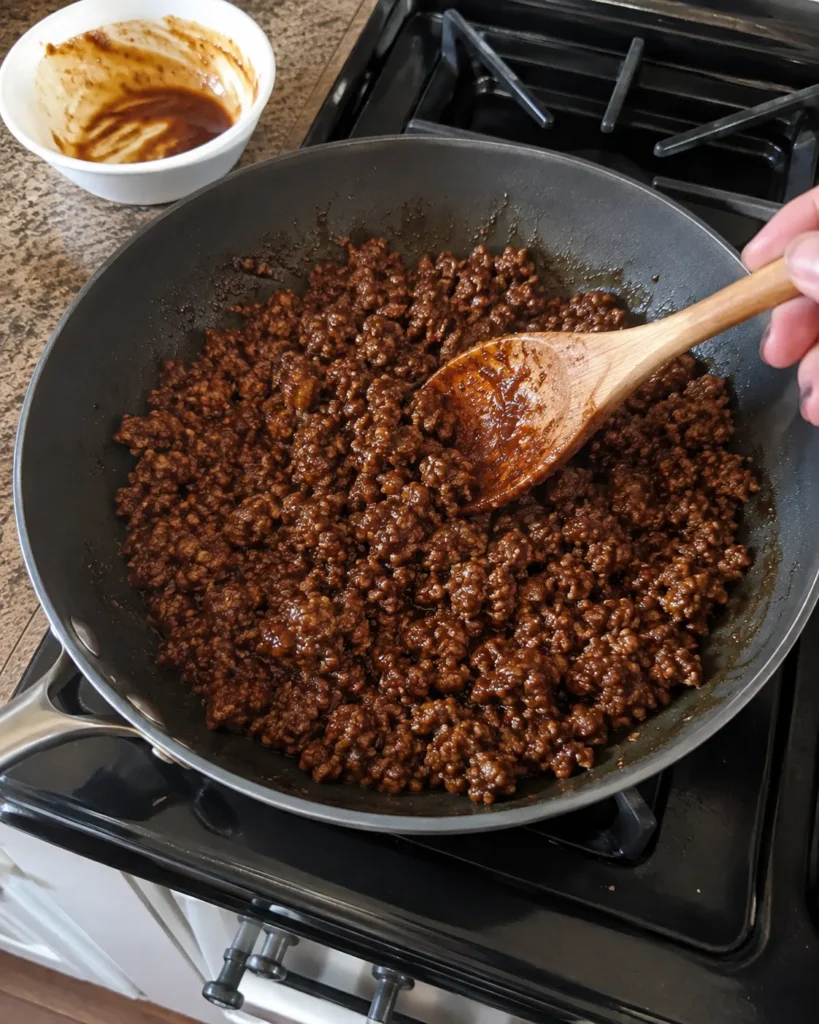
- Glaze the meat. Reduce the heat to medium. Pour in the sauce and stir for 1–2 minutes. The Korean Ground Beef Bowl filling is ready when the sauce clings without pooling.
- Finish and assemble. Remove the skillet from the heat and stir in the toasted sesame oil. Divide warm rice among four bowls, spoon the beef on top, and add cucumber, carrot, scallions, and sesame seeds.
Tips, Mistakes, and Substitutions – Korean Ground Beef Bowl
Use a wide skillet and avoid stirring constantly at the beginning. Hot-pan contact creates deeper flavor, while crowding encourages steaming.
Brown the beef before adding the sauce so moisture evaporates and the glaze can cling. If the finished mixture looks dry, add one tablespoon water. If it looks watery, simmer it for another minute.
For a milder Korean Ground Beef Bowl, use 1 teaspoon gochujang. For more heat, add extra gochujang or red pepper flakes at the table.
Ground turkey works, but its leaner texture benefits from one teaspoon neutral oil. Tamari can replace soy sauce.
Honey may replace brown sugar, producing a slightly stickier, more floral sauce. Brown rice adds chew, while cauliflower rice creates a lighter bowl.
Serving Ideas and Variations
Serve the Korean Ground Beef Bowl with kimchi, steamed broccoli, edamame, sautéed spinach, or a fried egg. Keep juicy toppings separate until serving.
For lettuce wraps, spoon the beef into sturdy leaves and serve rice alongside. For extra vegetables, cook mushrooms or bell pepper before adding the sauce.
Readers who enjoy quick skillet meals can also try this Tuna Melt Wrap, which combines a creamy tuna filling with a crisp skillet-toasted tortilla.
For another sweet-savory dinner, these Cheesy Sweet Chilli Chicken Flatbreads pair gentle heat with chicken, vegetables, and melted cheese.
The Veggie Breakfast Burrito is a useful make-ahead option when you need a meatless meal with eggs, beans, potatoes, and vegetables.
Storage, Freezing, and Reheating – Korean Ground Beef Bowl
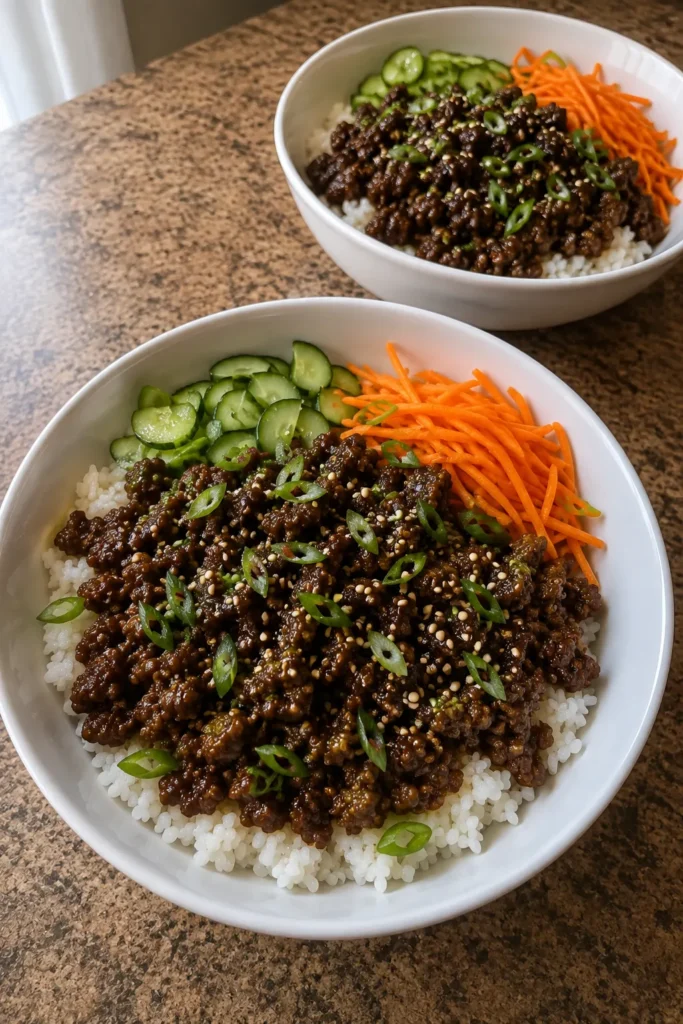
Cool the beef and rice promptly and store them in separate shallow, airtight containers. The FDA’s food-storage guidance recommends refrigerating perishable cooked food within two hours, or within one hour when the temperature is above 90°F. Keep cucumber and other raw toppings in a separate container.
Refrigerate the cooked beef for 3–4 days. Freeze it without fresh vegetables for up to 2 months; thaw it in the refrigerator.
Reheat the beef in a skillet over medium-low heat with one tablespoon water, stirring until steaming throughout. Or microwave it in short intervals, stirring between each. Reheat leftovers to 165°F, then assemble the Korean Ground Beef Bowl with freshly added vegetables.
Nutrition and Dietary Notes
Nutrition values are estimates based on the listed ingredients, yield, and assumed serving size. Values vary according to brands, substitutions, and portion size.
One serving includes approximately one-quarter of the seasoned beef, ¾ cup cooked white rice, cucumber, carrot, scallions, and sesame seeds.
| Nutrient | Estimated Amount per Serving | Main Source |
| Calories | 490 kcal | Beef, rice, sauce |
| Protein | 28 g | Ground beef |
| Carbohydrates | 59 g | Rice and brown sugar |
| Fiber | 3 g | Vegetables and rice |
| Total sugars | 10 g | Brown sugar and vegetables |
| Added sugars | About 7 g | Brown sugar and gochujang |
| Total fat | 16 g | Beef, sesame oil, seeds |
| Saturated fat | 5 g | Ground beef |
| Sodium | 850 mg | Soy sauce and gochujang |
| Iron | About 3 mg | Ground beef |
This Korean Ground Beef Bowl functions as a complete meal because it combines protein, carbohydrates, vegetables, and fat. Beef supplies most of the protein and iron. Rice supplies most carbohydrates, while cucumber and carrot add modest fiber. Soy sauce and gochujang provide most sodium; brown sugar and gochujang provide most added sugar.
To reduce sodium, choose lower-sodium soy sauce and use only 2 tablespoons. The flavor will be less salty and slightly less intense.
To increase fiber, use brown rice and add edamame or extra vegetables. The bowl will taste nuttier and feel more substantial.
To reduce added sugar, use 1 tablespoon brown sugar. The sauce will be more savory and slightly less glossy.
Major allergens include soy and sesame. Gochujang may contain wheat or soy depending on the brand, so check the label when cooking for someone with allergies. For a gluten-free Korean Ground Beef Bowl, use certified gluten-free tamari and gochujang.
Frequently Asked Questions – Korean Ground Beef Bowl
Is Korean Ground Beef Bowl an authentic Korean recipe?
It is Korean-inspired. Soy, garlic, ginger, sesame, and gochujang echo familiar Korean flavors, but the ground-beef method is a practical adaptation rather than traditional bulgogi.
Can I make it without gochujang?
Yes. Replace it with 1 teaspoon sriracha and ½ teaspoon mild miso, or omit it for a sweeter soy-garlic bowl. The flavor will be less fermented and less distinctly Korean-inspired.
What ground beef works best?
A 90/10 blend provides enough fat for flavor while usually producing little excess grease. An 85/15 blend also works, but drain the skillet before adding the sauce.
Can I meal-prep the bowls?
Yes. Portion the rice and beef into containers and keep cucumber and other crisp toppings separate. Refrigerate everything promptly and add the cold vegetables after reheating.
Why is my beef watery?
The skillet may be crowded, the beef may have been stirred too early, or the sauce may need another minute to reduce. Use medium-high heat for browning and a wide skillet.
Can I serve it without rice?
Yes. Try quinoa, noodles, cauliflower rice, shredded cabbage, or lettuce cups. Each choice changes the texture and carbohydrate level.
Final Thoughts – Korean Ground Beef Bowl
Korean Ground Beef Bowl combines caramelized beef, a balanced soy-gochujang glaze, warm rice, and crisp vegetables in a dinner that feels colorful and satisfying without complicated preparation. Keep the skillet hot, reduce the sauce until it clings, and add sesame oil at the end for the best texture and aroma.
Print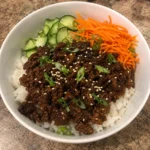
Korean Ground Beef Bowl
- Prep Time: 10 minutes
- Cook Time: 10 minutes
- Total Time: 20 minutes
- Yield: 4 bowls 1x
- Category: Main Dish
- Method: Stovetop
- Cuisine: Korean-Inspired
Description
A fast Korean-inspired rice bowl with caramelized ground beef, a sweet-savory gochujang sauce, fluffy rice, crisp cucumber, shredded carrot, scallions, and sesame seeds.
Ingredients
1 pound 90/10 lean ground beef
3 tablespoons reduced-sodium soy sauce
2 tablespoons packed brown sugar
1 tablespoon water
2 teaspoons gochujang
3 garlic cloves, minced
2 teaspoons freshly grated ginger
1 teaspoon rice vinegar
1 teaspoon toasted sesame oil
3 cups cooked white rice
1 cup thinly sliced cucumber
1 cup shredded carrot
3 scallions, thinly sliced
2 teaspoons sesame seeds
Instructions
1. Whisk the soy sauce, brown sugar, water, gochujang, garlic, ginger, and rice vinegar in a small bowl until smooth.
2. Heat a wide skillet over medium-high heat.
3. Add the ground beef, press it into a fairly even layer, and leave it undisturbed for 2 minutes.
4. Break the beef into small crumbles and cook for 3 to 4 minutes, until no raw-looking sections remain.
5. Drain excess grease if more than a thin coating collects in the skillet.
6. Check the ground beef with a food thermometer and confirm that it has reached 160°F.
7. Reduce the heat to medium and pour the prepared sauce into the skillet.
8. Cook for 1 to 2 minutes, stirring, until the sauce becomes glossy and clings to the beef without pooling.
9. Remove the skillet from the heat and stir in the toasted sesame oil.
10. Divide the warm rice among four bowls.
11. Top each bowl with the glazed beef, sliced cucumber, shredded carrot, scallions, and sesame seeds.
Notes
Reduce the gochujang to 1 teaspoon for a milder bowl.
Let the beef brown before stirring to encourage caramelized edges.
Add 1 tablespoon of water if the sauce becomes too thick.
Simmer for an additional minute if the sauce looks watery.
Tamari can replace the soy sauce.
Ground turkey may replace the beef; add 1 teaspoon of neutral oil when using very lean turkey.
Check the gochujang label for wheat, soy, and other allergens.
Refrigerate the beef and rice separately for 3 to 4 days.
Freeze the cooked beef without the fresh vegetables for up to 2 months.
Reheat leftovers until they reach 165°F.
Nutrition
- Serving Size: 1 bowl
- Calories: 490 kcal
- Sugar: 10g
- Sodium: 850mg
- Fat: 16g
- Saturated Fat: 5g
- Unsaturated Fat: 10g
- Trans Fat: 0.5g
- Carbohydrates: 59g
- Fiber: 3g
- Protein: 28g
- Cholesterol: 75mg