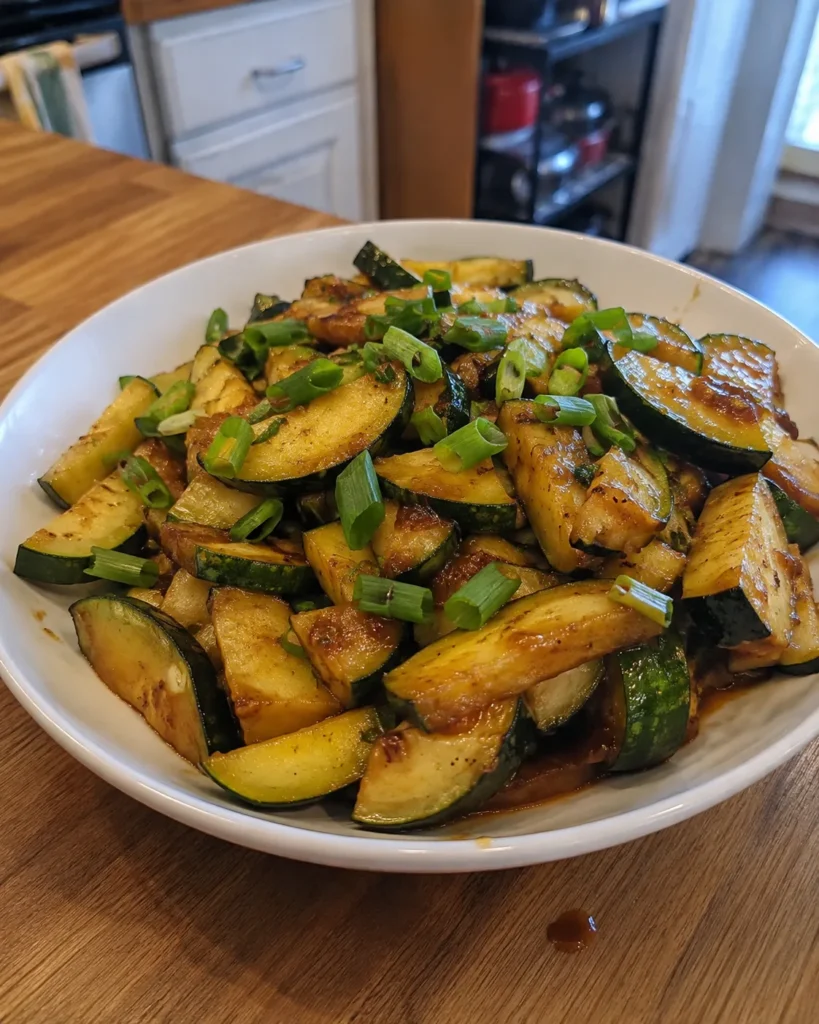
Zucchini Stir-Fry turns fresh zucchini into a glossy, savory side dish in about 10 minutes, with browned edges, a tender center, and enough bite to keep the vegetable from becoming mushy. Ginger, soy sauce, sesame oil, honey, and Sriracha give each piece a salty-sweet flavor with gentle heat.
Because zucchini contains plenty of moisture, the real trick is controlling the pan rather than adding complicated ingredients. A hot skillet, enough room for the vegetables, and a short cooking time make the difference. Save or print this recipe when you need a fast vegetable side for a busy weeknight.
Quick This Zucchini Stir-Fry Snapshot
| Detail | Information |
|---|---|
| Prep time | 5 minutes |
| Cook time | 5 minutes |
| Total time | 10 minutes |
| Servings | 4 |
| Serving size | About 1 cup |
| Difficulty | Easy |
| Cooking method | Stovetop stir-fry |
| Flavor | Savory, lightly sweet, gingery, gently spicy |
| Texture | Crisp-tender with lightly browned edges |
| Best for | Weeknight sides, rice bowls, quick vegetable meals |
Table of Contents
Why You’ll Love This Zucchini Stir-Fry
- Fast: From chopping to serving, the recipe takes about 10 minutes.
- Simple: The ingredient list stays short and uses an uncomplicated skillet method.
- Texture-focused: High heat encourages browning while the short cooking time helps zucchini remain crisp-tender.
- Flavorful: Ginger, sesame, soy sauce, honey, and Sriracha turn mild zucchini into a punchier side.
- Flexible: Serve it with rice, noodles, chicken, tofu, shrimp, or another main dish.
- Beginner-friendly: Visual cues matter more than perfect timing, so you can see when the vegetables are ready.
Ingredients and Why They Matter
Zucchini has a delicate flavor and naturally high moisture content, so it benefits from ingredients that add contrast without requiring prolonged cooking. The sauce combines savory soy, aromatic ginger, nutty sesame oil, sweetness, and heat.
Rinse zucchini under plain running water before cutting it. The FDA recommends rinsing fresh produce under running water rather than using soap or commercial produce wash.
| Main Ingredient | Purpose | Nutrition Contribution | Best Substitution |
| Zucchini | Main vegetable and crisp-tender base | Carbohydrates, fiber, vitamin C and other micronutrients | Yellow summer squash |
| Lower-sodium soy sauce | Adds saltiness and umami | Main sodium source | Lower-sodium tamari |
| Fresh ginger | Adds warm, aromatic flavor | Small amount of micronutrients | Ginger paste |
| Sesame oil | Adds toasted, nutty flavor | Fat | Neutral oil plus sesame seeds |
| Honey | Balances salt and heat | Carbohydrates and added sugar | Maple syrup |
| Sriracha | Adds chile heat and acidity | Primarily seasoning; may add sodium and sugar | Another chile-garlic sauce |
| Cornstarch | Thickens the sauce | Small amount of carbohydrate | Arrowroot starch |
USDA FoodData Central includes raw green zucchini among its analyzed foods and can be used as an authoritative reference when estimating nutrient values.
How to Make Zucchini Stir-Fry
The goal is not to cook the zucchini until completely soft. You want light browning around the edges while the center still offers a little resistance.
- Prepare the vegetables. Wash and dry 3 medium zucchini, trim the ends, and cut them into evenly sized pieces. Slice the scallion greens and grate 1 tablespoon fresh ginger.
- Mix the sauce. Stir together 1½ tablespoons lower-sodium soy sauce, 1 tablespoon Sriracha, 1 tablespoon honey, 1½ teaspoons cornstarch, and 2 tablespoons water. Mix until no visible cornstarch lumps remain.
- Heat the skillet. Place a large skillet over medium-high heat. Add 1 tablespoon toasted sesame oil. The pan should be hot before the zucchini goes in, but the oil should not be smoking heavily.
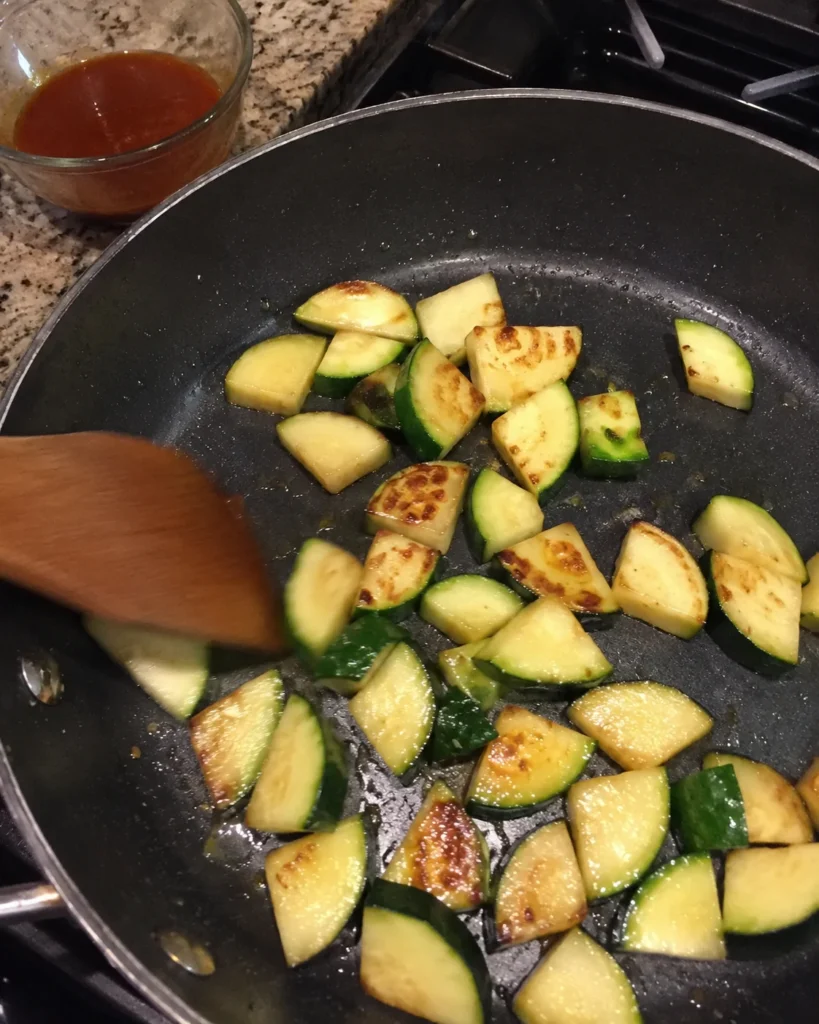
- Brown the zucchini. Add the pieces in as even a layer as possible. Cook for about 2 minutes, stirring or turning enough to expose several surfaces to the pan. Look for light golden-brown spots.
- Briefly soften. Continue cooking just until the zucchini becomes bright and slightly tender. Avoid leaving it covered or simmering for long, because accumulated moisture can produce soft rather than crisp-tender vegetables.
- Add the sauce. Reduce the heat to medium, stir the sauce once more, and pour it into the skillet. Toss for 1–2 minutes until it becomes glossy and lightly coats the zucchini.
- Finish immediately. Remove the Zucchini Stir-Fry from the heat and scatter sliced scallion greens over the top. The finished zucchini should be tender enough to bite easily but should not collapse when lifted.
Tips, Mistakes, and Substitutions
The most important rule for Zucchini Stir-Fry is avoiding excess moisture. Zucchini releases water quickly once heated, particularly if the skillet is crowded.
Use a wide skillet so more pieces touch the hot surface. If your pan is small, cooking the zucchini in two batches can give you better browning than packing everything together.
Cut pieces to a similar size. Thin pieces become soft before thicker ones finish cooking, creating an inconsistent texture.
Another common mistake is cooking the sauce too long. Cornstarch thickens quickly; once the sauce looks glossy and clings lightly, the dish is ready.
For less heat, reduce the Sriracha rather than removing the savory ingredients. For a different sweetness, maple syrup can replace honey, although its flavor is slightly more noticeable.
Yellow summer squash is the simplest vegetable substitution because its cooking behavior is similar. For a zucchini recipe with a completely different crisp texture, try these Air Fryer Zucchini Fritters, which turn zucchini into a browned appetizer or side. The site also features zucchini in its High-Fiber Dinner, alongside quinoa, chickpeas, sweet potato, and bell pepper.
Serving Ideas and Variations
Serve Zucchini Stir-Fry hot while its texture is at its best. Spoon it over steamed rice for a light bowl, or use it as the vegetable component beside tofu, chicken, shrimp, salmon, or noodles.
For extra vegetables, add sliced bell pepper, mushrooms, or onion, but cook ingredients according to how quickly they soften. Mushrooms in particular should have enough skillet space for their moisture to evaporate.
You can also turn the stir-fry into part of a larger vegetable-centered dinner. Sheet Pan Gnocchi Broccoli provides another easy way to build a meal around vegetables, with zucchini listed as one possible seasonal variation.
If you have more zucchini to use afterward, Chocolate Zucchini Bread takes the ingredient in a completely different direction, using shredded zucchini to add moisture to a cocoa-rich quick bread.
Storage, Freezing, and Reheating – Zucchini Stir-Fry
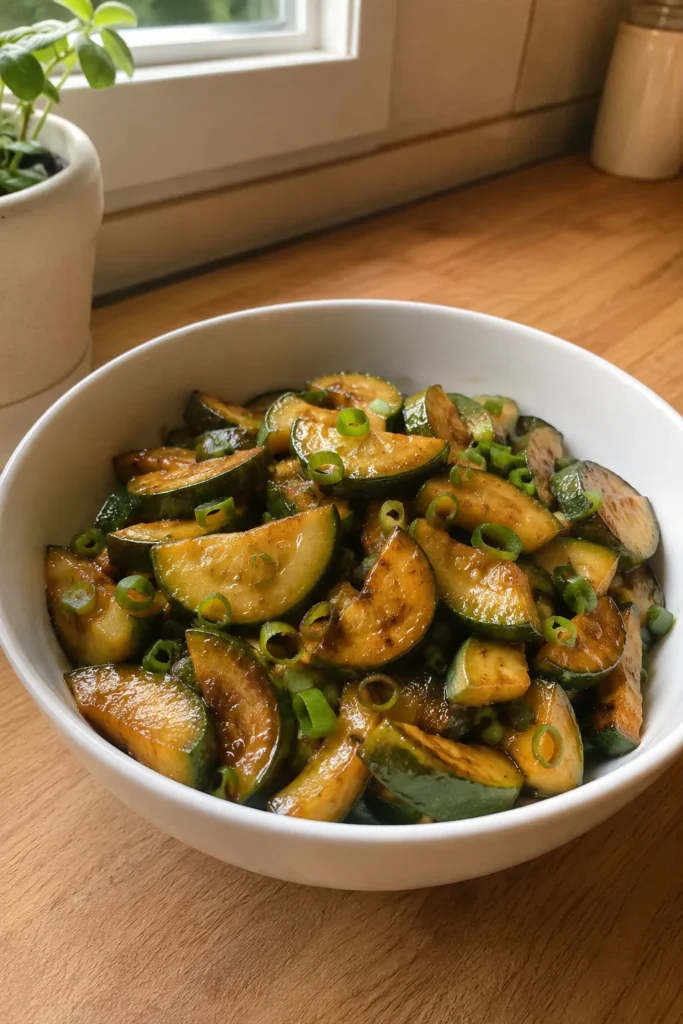
Transfer leftover Zucchini Stir-Fry to a shallow airtight container and refrigerate it promptly. USDA guidance recommends refrigerating leftovers within 2 hours and generally using cooked leftovers within 3–4 days. USDA leftovers and food-safety guidance provides additional storage information.
For this recipe, texture is the limiting factor before safety becomes the only consideration. The zucchini continues to soften during storage, so it is best during the first couple of days.
Reheat briefly in a skillet over medium heat, tossing only until hot. A microwave works for convenience, but it generally produces softer zucchini.
Freezing is possible, but it is not the best choice for maintaining the original crisp-tender texture because zucchini contains substantial moisture. If you freeze leftovers, expect a softer vegetable after thawing.
Nutrition and Dietary Notes
Nutrition values are estimates based on the listed ingredients, yield, and assumed serving size. Values vary according to brands, substitutions, and portion size.
One serving is approximately 1 cup, assuming the skillet is divided into four equal portions. USDA FoodData Central provides nutrient information for raw green zucchini and other ingredients used for nutrition analysis.
| Nutrient | Estimated Amount per Serving | Main Source |
| Calories | About 100 | Zucchini, sesame oil, honey |
| Protein | About 2–3 g | Zucchini, soy sauce |
| Carbohydrates | About 14 g | Zucchini, honey, sauce |
| Fiber | About 2 g | Zucchini |
| Total sugars | About 9 g | Zucchini, honey, Sriracha |
| Added sugars | About 5 g | Honey and possibly Sriracha |
| Total fat | About 4 g | Sesame oil |
| Saturated fat | About 1 g or less | Sesame oil |
| Sodium | About 300–400 mg | Soy sauce and Sriracha |
| Potassium | Moderate amount | Zucchini |
This recipe functions primarily as a vegetable side dish, rather than a complete meal. Zucchini supplies most of the volume, fiber, and produce-derived micronutrients. Sesame oil provides most of the fat, honey supplies most of the added sugar, and soy sauce is the major sodium contributor.
To increase protein, serve it with tofu, edamame, eggs, chicken, shrimp, or another protein rather than dramatically changing the sauce. To increase fiber, pair it with brown rice, quinoa, beans, or another fiber-rich food. To lower sodium, choose lower-sodium soy sauce and reduce Sriracha slightly; the result will taste less salty and may need extra ginger or acidity for balance.
The recipe contains soy and sesame as written. Check bottled Sriracha and soy sauce labels for additional allergens or dietary requirements. Tamari can sometimes replace soy sauce when wheat avoidance is necessary, but labels should still be checked because formulations vary.
Frequently Asked Questions – Zucchini Stir-Fry
Why does my zucchini stir-fry become watery?
Zucchini naturally releases moisture as it cooks. Crowding the skillet, using low heat, or cooking for too long allows that liquid to accumulate instead of evaporating. Use a wide, hot skillet and keep the cooking time short.
Do I need to peel zucchini before stir-frying?
No. The tender skin can remain on medium zucchini, saves preparation time, and adds color. Wash the outside under running water before cutting it, following FDA produce-handling guidance.
How do I keep Zucchini Stir-Fry crisp?
Start with a properly heated skillet, avoid overcrowding, and remove the zucchini while it still has slight firmness. Remember that it continues softening briefly from residual heat.
Can I make this recipe without Sriracha?
Yes. Reduce it substantially or replace it with a milder chile sauce. If you omit it completely, the dish loses both heat and some seasoning, so taste the finished sauce before serving.
Can I add protein directly to the skillet?
Yes, but cook the protein appropriately before combining it with the zucchini. Tofu is particularly convenient for a vegetarian version. Meat, poultry, and seafood require their own safe cooking temperatures and may need to be cooked separately before the quick zucchini stage.
What can I serve with Zucchini Stir-Fry?
Rice and noodles are simple choices, while chicken, tofu, shrimp, salmon, or eggs add protein. For a larger vegetable-forward plate, combine it with grains or another substantial side.
Final Thoughts – Zucchini Stir-Fry
Zucchini Stir-Fry makes good use of a vegetable that can easily become too soft when overcooked. Keep the skillet hot, give the pieces room, and stop cooking when they are glossy, lightly browned, and still pleasantly firm for a fast side that delivers much more flavor than its short cooking time suggests.
Print
Zucchini Stir-Fry
- Prep Time: 5 minutes
- Cook Time: 5 minutes
- Total Time: 10 minutes
- Yield: 4 servings 1x
- Category: Side Dish
- Method: Stir-Fry / Stovetop
- Cuisine: Asian-inspired
- Diet: Vegetarian
Description
A quick zucchini stir-fry with fresh ginger, soy sauce, sesame oil, honey, and Sriracha. The zucchini stays crisp-tender while a glossy sweet-savory sauce coats every piece.
Ingredients
3 medium zucchini
1 tablespoon fresh grated ginger
1½ tablespoons lower-sodium soy sauce
1 tablespoon Sriracha
1 tablespoon honey
1½ teaspoons cornstarch
2 tablespoons water
1 tablespoon toasted sesame oil
Green tops from 3 scallions, sliced
Instructions
1. Wash and dry the zucchini. Trim the ends and cut into evenly sized pieces.
2. Combine soy sauce, Sriracha, honey, cornstarch, and water in a small bowl until smooth.
3. Heat sesame oil in a large skillet over medium-high heat.
4. Add zucchini in an even layer and cook for about 2 minutes, turning occasionally, until lightly browned.
5. Continue cooking briefly until bright green and crisp-tender.
6. Reduce heat to medium. Stir the sauce again and pour it into the skillet.
7. Toss for 1–2 minutes, until the sauce becomes glossy and coats the zucchini.
8. Remove from heat and finish with sliced scallion greens. Serve immediately.
Notes
Avoid overcrowding the skillet.
Keep the cooking time short to prevent mushy zucchini.
Reduce Sriracha for a milder dish.
Yellow summer squash can replace zucchini.
Refrigerate leftovers promptly in an airtight container and use within 3–4 days.
Freezing is possible, but the zucchini will be softer after thawing.
Reheat briefly in a skillet over medium heat until hot.
Nutrition
- Serving Size: About 1 cup
- Calories: 100 kcal
- Sugar: 9g
- Sodium: 350mg
- Fat: 4g
- Saturated Fat: 1g
- Unsaturated Fat: 3g
- Trans Fat: 0g
- Carbohydrates: 14g
- Fiber: 2g
- Protein: 2.5g
- Cholesterol: 0mg