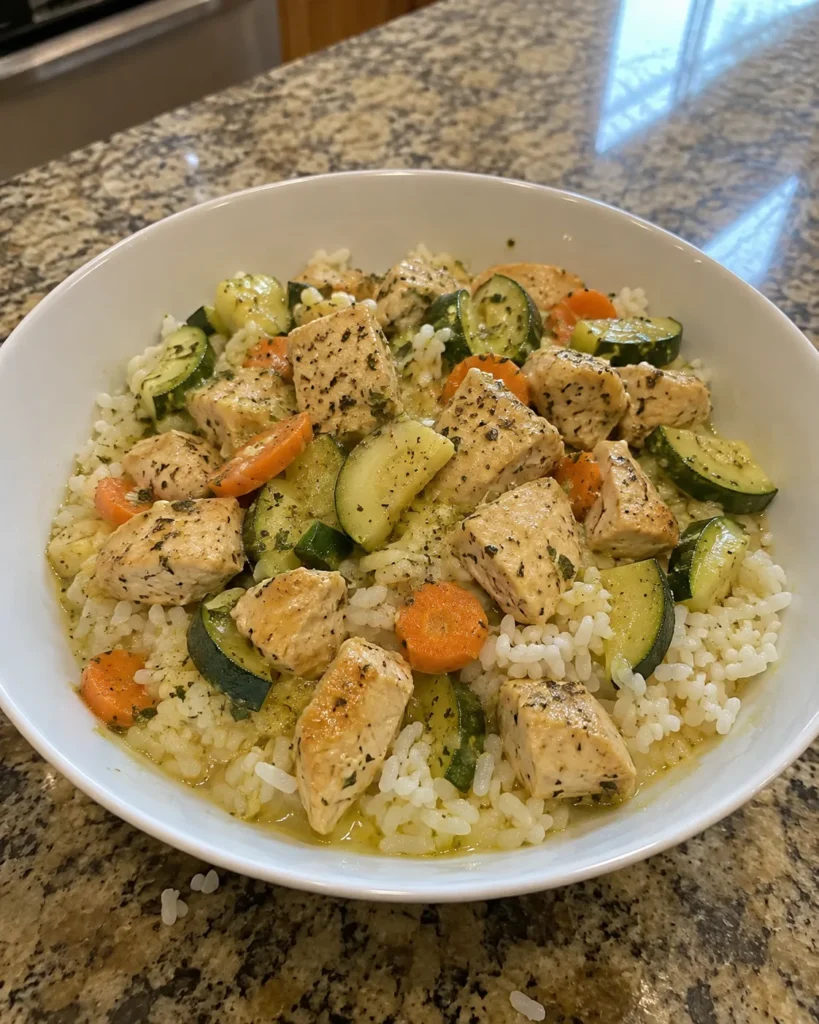
Gentle GLP-1 Dinners are smaller, protein-centered evening meals designed to feel practical when appetite is reduced or richer foods suddenly seem less appealing. The idea is to build a comfortable plate with lean protein, tender vegetables, a modest carbohydrate, and enough moisture to keep it easy to eat.
GLP-1 medicines can slow digestion and may cause gastrointestinal symptoms in some people. Cleveland Clinic’s GLP-1 nutrition guidance recommends nutrient-dense foods, including lean proteins, fruits, vegetables, and whole grains, while noting that high-fat or spicy foods may worsen symptoms for some people. Save or print this guide for lower-appetite evenings.
Quick these Gentle GLP-1 Dinners Snapshot
| Detail | Information |
|---|---|
| Prep time | 15 minutes |
| Cook time | 20 minutes |
| Total time | 35 minutes |
| Servings | 4 |
| Serving size | About 1½ cups |
| Difficulty | Easy |
| Cooking method | Skillet |
| Flavor | Mild, lemony, savory |
| Texture | Tender chicken, soft rice, fork-tender vegetables |
| Best for | Smaller weeknight dinners and meal prep |
Table of Contents
Why You’ll Love These Gentle GLP-1 Dinners
- The portions are moderate instead of oversized.
- Lean chicken supplies substantial protein without requiring a heavy sauce.
- Cooked zucchini and carrots provide vegetables in a softer texture.
- Rice adds a mild carbohydrate that can be reduced or increased according to appetite.
- Lemon and herbs add brightness without relying on strong chile heat.
- The base formula is flexible enough to use with fish, turkey, tofu, or another tolerated protein.
Gentle GLP-1 Dinners are not a medical promise; they are a simple framework for less-rich evening meals.
Ingredients and Why They Matter
For the main bowl, use 1 pound boneless skinless chicken breast, 2 cups cooked rice, 2 medium zucchini, 2 carrots, 1 cup low-sodium chicken broth, 1 tablespoon olive oil, 1 lemon, 1 teaspoon dried parsley or Italian herbs, ½ teaspoon salt, and black pepper to taste.
| Main Ingredient | Purpose | Nutrition Contribution | Best Substitution |
|---|---|---|---|
| Chicken breast | Main protein | Protein | Turkey breast or tofu |
| Cooked rice | Mild base | Carbohydrates | Quinoa or potato |
| Zucchini | Soft vegetable | Fiber, potassium | Yellow squash |
| Carrots | Color and sweetness | Carbohydrates, fiber | Green beans |
| Olive oil | Prevents sticking, adds richness | Unsaturated fat | Avocado oil |
| Broth | Keeps mixture moist | Fluid, sodium | Water plus herbs |
| Lemon | Brightens flavor | Vitamin C | Mild vinegar |
When overall intake drops, protein and fiber still matter. Cleveland Clinic highlights fish, chicken, tofu, beans, and fiber-rich plant foods as useful choices while taking a GLP-1 medicine.
How to Make Gentle GLP-1 Dinners
- Prepare the ingredients. Cut the chicken into bite-size pieces and slice the zucchini and carrots thinly. Smaller pieces cook quickly and make it easier to portion a modest bowl.
- Cook the chicken. Warm the olive oil in a large skillet over medium heat. Add the chicken, season lightly, and cook for about 6 to 8 minutes, turning occasionally. The pieces should look opaque and lightly golden.
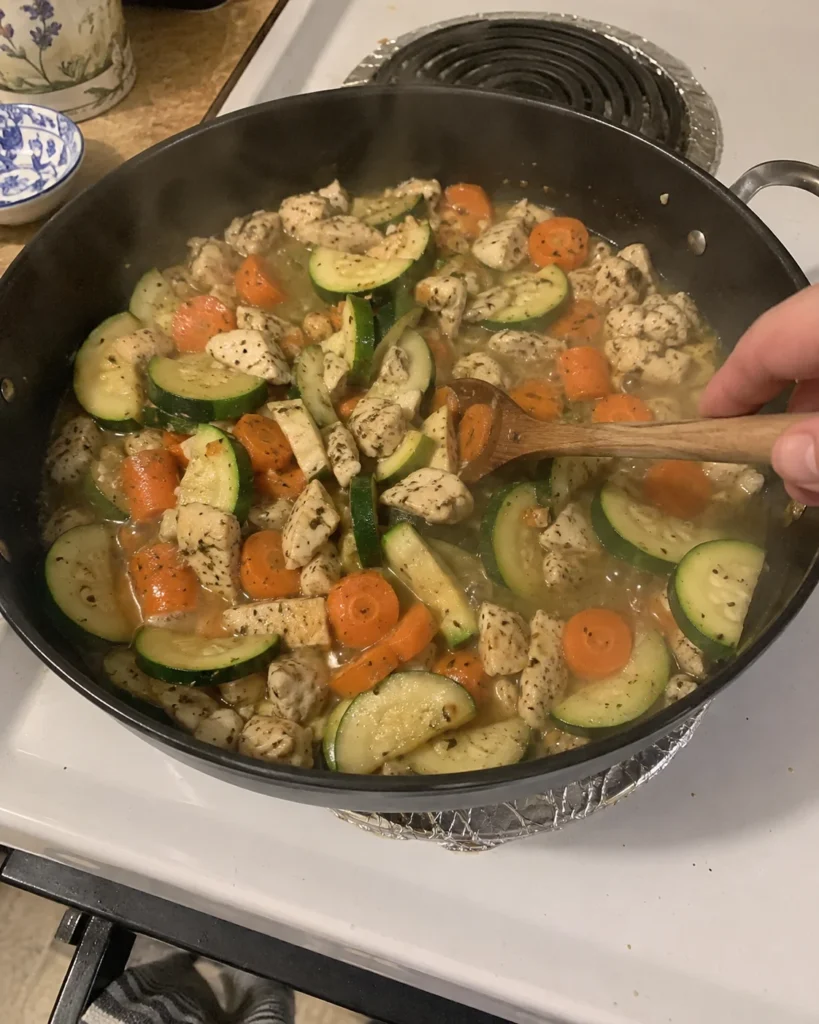
- Add the vegetables. Stir in the carrots, zucchini, herbs, and broth. Cover and cook for 6 to 8 minutes, until the carrots are tender and the zucchini is soft but not collapsing.
- Check doneness. Use a food thermometer on the thickest chicken pieces. The USDA’s chicken safety guidance recommends a minimum internal temperature of 165°F for chicken. If needed, simmer for another minute or two.
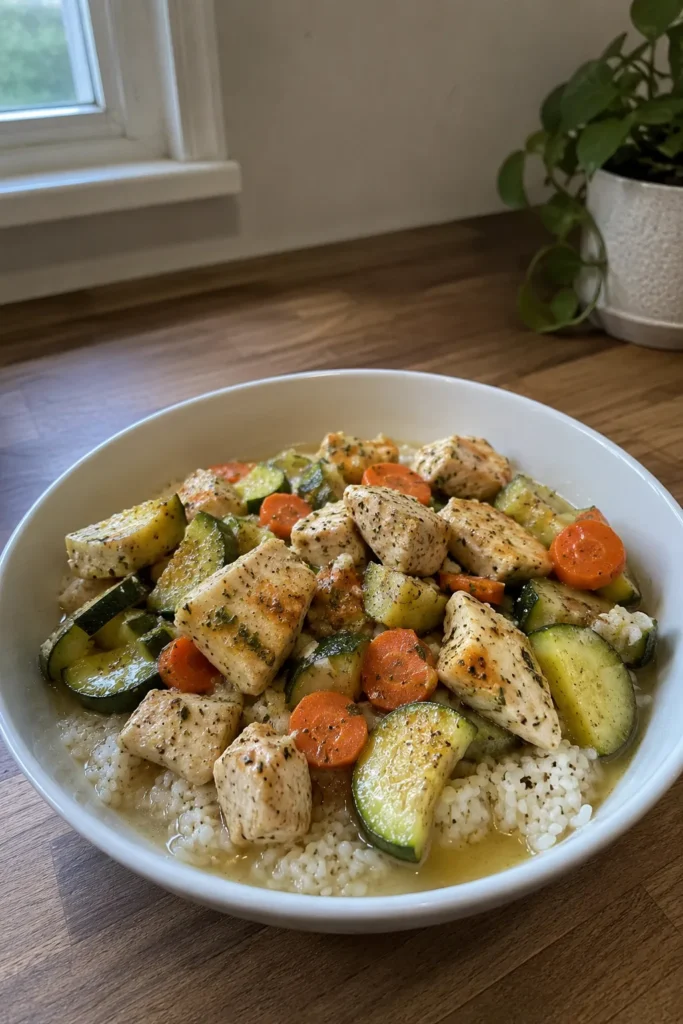
- Finish gently. Stir in the lemon juice. Divide the rice among four bowls and spoon the chicken, vegetables, and a little broth over each serving. Start with a smaller portion if that better matches your appetite; additional food can always be added.
Tips, Mistakes, and Substitutions
For Gentle GLP-1 Dinners, keep the meal simple. Eat slowly, notice fullness, and do not treat the listed serving size as a requirement. Cleveland Clinic notes that individual triggers vary and that high-fat or spicy foods may aggravate symptoms for some people.
Avoid excess oil, which makes the bowl richer. Do not overcook the chicken; broth and a thermometer help keep it moist.
If rice feels too filling, use less and keep more broth in the bowl. Choose soft cooked vegetables when raw ones are unappealing. Tofu or white fish can replace chicken.
Serving Ideas and Variations
Vary Gentle GLP-1 Dinners with shredded turkey and sweet potato, baked white fish with rice and zucchini, or tofu with quinoa and carrots.
For another fish option, try this Baked Tilapia Bliss. It combines tilapia with zucchini, peppers, onion, lemon, and a straightforward baked preparation, giving you an easy way to build a fish-centered dinner with vegetables.
If you want a make-ahead chicken meal, Lemon Parmesan Chicken Pasta Salad combines chicken, pasta, spinach, and lemon vinaigrette. A smaller portion with less dressing or Parmesan may feel gentler on days when richer foods are unappealing.
For turkey, these Spinach Feta Turkey Burgers provide another protein-centered option. Serve a smaller patty with cooked vegetables, and adjust the feta or bun according to appetite and tolerance.
Storage, Freezing, and Reheating
Refrigerate the chicken-and-rice bowls in shallow airtight containers within two hours of cooking. Keep leftovers refrigerated and use them within 3 to 4 days. USDA guidance supports a 3-to-4-day refrigerated storage window for cooked leftovers.
Reheat only the portion you plan to eat, adding a splash of broth or water so the rice and chicken do not dry out. USDA guidance recommends reheating leftovers to 165°F.
The chicken mixture can be frozen for longer storage, although zucchini becomes noticeably softer after thawing. Rice can also be frozen in meal-size portions.
Nutrition and Dietary Notes
Nutrition values are estimates based on the listed ingredients, yield, and assumed serving size. Values vary according to brands, substitutions, and portion size.
| Nutrient | Estimated Amount per Serving | Main Source |
|---|---|---|
| Calories | About 390–420 | Chicken, rice, oil |
| Protein | About 35–40 g | Chicken |
| Carbohydrates | About 45–50 g | Rice, vegetables |
| Fiber | About 3–4 g | Zucchini, carrots |
| Total sugars | About 5–7 g | Vegetables |
| Added sugars | 0 g | None added |
| Total fat | About 7–9 g | Chicken, olive oil |
| Saturated fat | About 1.5–2 g | Chicken |
| Sodium | About 450–600 mg | Broth, salt |
| Potassium | Moderate amount | Chicken, vegetables |
One serving of these Gentle GLP-1 Dinners supplies protein, carbohydrate, vegetables, and some fat. Chicken provides most protein, rice most carbohydrate, vegetables fiber, and olive oil added fat.
For more fiber, replace part of the white rice with quinoa or brown rice, increasing fiber gradually if needed. For less sodium, use unsalted broth and less salt, then rely on lemon and herbs for flavor. For a smaller meal, reduce portions without automatically removing the protein.
The main allergens depend on substitutions and broth brands. The base recipe is naturally free of milk, eggs, peanuts, tree nuts, fish, shellfish, and sesame, but packaged broth may contain allergens or gluten, so check its label.
These ideas are general food guidance, not individualized medical nutrition advice. A 2025 joint advisory on nutritional priorities during GLP-1 therapy emphasizes adequate nutrient intake, management of gastrointestinal symptoms, and individualized professional support during treatment.
Frequently Asked Questions – Gentle GLP-1 Dinners
What makes a dinner “gentle” while taking a GLP-1?
There is no official medical definition. Here, “gentle” means moderate portions, lean protein, relatively mild seasoning, tender vegetables, and limited heavy added fat. Individual tolerance still matters most.
Do Gentle GLP-1 Dinners have to be low carb?
No. GLP-1 nutrition guidance does not require eliminating carbohydrates. Nutrient-dense carbohydrate foods can fit, and the amount can be adjusted according to appetite, glucose-management needs, and professional advice.
Should I force myself to finish the serving?
No. The serving size is an estimate for recipe planning, not a target you must finish. Stop when comfortably full and speak with your healthcare professional if you are struggling to eat or drink enough.
Can I make these dinners vegetarian?
Yes. Firm tofu is the simplest substitution. Beans can also add protein and fiber, although some people may find larger portions of legumes harder to tolerate during digestive discomfort.
What if nausea or vomiting continues?
Contact the clinician who prescribed your medication for persistent or severe symptoms, especially if you cannot keep fluids down. Food adjustments should not replace medical evaluation when symptoms are significant.
Can I meal-prep Gentle GLP-1 Dinners?
Yes. Divide the chicken, rice, and vegetables into smaller containers so you can reheat only what you want. Keeping portions flexible can be more practical than packing one large dinner.
Final Thoughts – Gentle GLP-1 Dinners
Gentle GLP-1 Dinners work best as a flexible template rather than a list of forbidden and permitted foods. Start with a comfortable portion of lean protein, add tender vegetables and a modest carbohydrate, keep the seasoning pleasant, and adjust the bowl according to how you feel that day.
Print
Gentle GLP-1 Dinners
- Prep Time: 15 minutes
- Cook Time: 20 minutes
- Total Time: 35 minutes
- Yield: 4 servings 1x
- Category: Dinner
- Method: Skillet
- Cuisine: American-inspired
Description
A mild, protein-centered lemon chicken bowl with tender zucchini, carrots, soft rice, low-sodium broth, and fresh lemon. This flexible dinner is lightly seasoned and portion-friendly.
Ingredients
1 lb boneless skinless chicken breast
2 cups cooked rice
2 medium zucchini
2 carrots
1 cup low-sodium chicken broth
1 tbsp olive oil
Juice of 1 lemon
1 tsp dried parsley or Italian herbs
1/2 tsp salt
Black pepper to taste
Instructions
1. Cut the chicken into bite-size pieces and thinly slice the zucchini and carrots.
2. Heat the olive oil in a large skillet over medium heat. Add the chicken, season lightly, and cook for 6 to 8 minutes, turning occasionally, until opaque and lightly golden.
3. Add the carrots, zucchini, dried herbs, and chicken broth. Cover and cook for 6 to 8 minutes, until the carrots are tender and the zucchini is soft but not falling apart.
4. Check the thickest chicken pieces with a food thermometer. Continue cooking if needed until the chicken reaches 165°F internally.
5. Stir in the lemon juice.
6. Divide the cooked rice among four bowls and spoon the chicken, vegetables, and a little broth over each serving.
Notes
Begin with a smaller serving if preferred and add more according to appetite.
Keep the seasoning mild and adjust the amount of rice, vegetables, and protein according to individual tolerance.
Use certified gluten-free chicken broth if a gluten-free version is needed.
For storage, refrigerate promptly and use within 3 to 4 days.
Add a splash of broth or water when reheating and heat leftovers to 165°F.
Individual GLP-1 medication tolerance varies; this recipe is general food guidance and not individualized medical nutrition advice.
Nutrition
- Serving Size: About 1 1/2 cups
- Calories: 405 kcal
- Sugar: 6g
- Sodium: 525mg
- Fat: 8g
- Saturated Fat: 2g
- Unsaturated Fat: 6g
- Trans Fat: 0g
- Carbohydrates: 48g
- Fiber: 4g
- Protein: 38g
- Cholesterol: 95mg