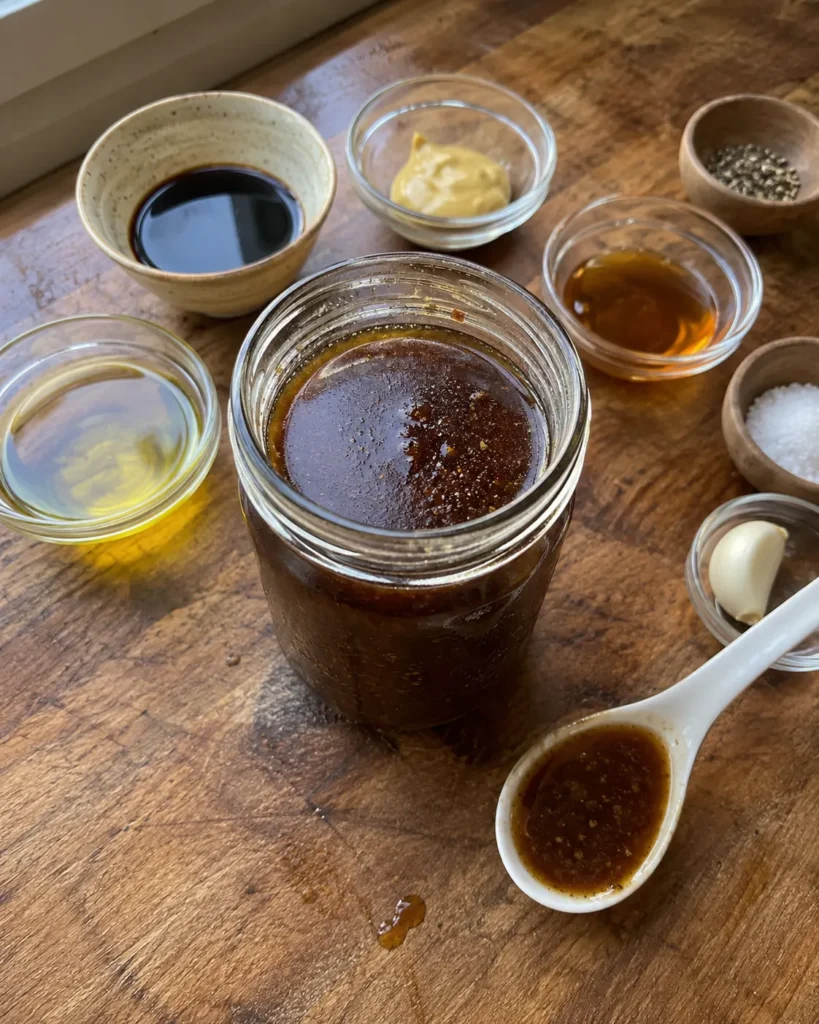
Balsamic Vinaigrette is a quick homemade dressing that blends fruity vinegar, olive oil, Dijon, honey, and garlic into a tangy, savory, lightly sweet mixture. It takes about five minutes and uses familiar pantry ingredients.
The texture should be pourable but lightly thickened, with enough body to cling to greens. Save or print this recipe for salads, roasted vegetables, grain bowls, and weeknight meals.
Quick Recipe Snapshot
| Detail | Information |
|---|---|
| Prep time | 5 minutes |
| Cook time | 0 minutes |
| Total time | 5 minutes |
| Servings | 12 |
| Serving size | 1 tablespoon |
| Difficulty | Easy |
| Cooking method | Whisking or shaking |
| Flavor | Tangy, fruity, savory, lightly sweet |
| Texture | Glossy, smooth, pourable |
| Best for | Salads, vegetables, grain bowls, and marinades |
Table of Contents
Table of Contents
Why You’ll Love This Balsamic Vinaigrette
- Fast: Everything comes together in about five minutes.
- Balanced: Dijon and honey soften the vinegar without hiding its fruity character.
- Flexible: You can make it sharper, sweeter, creamier, or more herb-forward.
- Beginner-friendly: A jar with a tight lid works when you do not want to whisk.
- Useful beyond salad: It adds contrast to vegetables, grains, chicken, and sandwiches.
A well-balanced Balsamic Vinaigrette should taste lively, not harsh. Vinegar provides acidity, olive oil rounds the edges, mustard adds depth, and honey softens the finish.
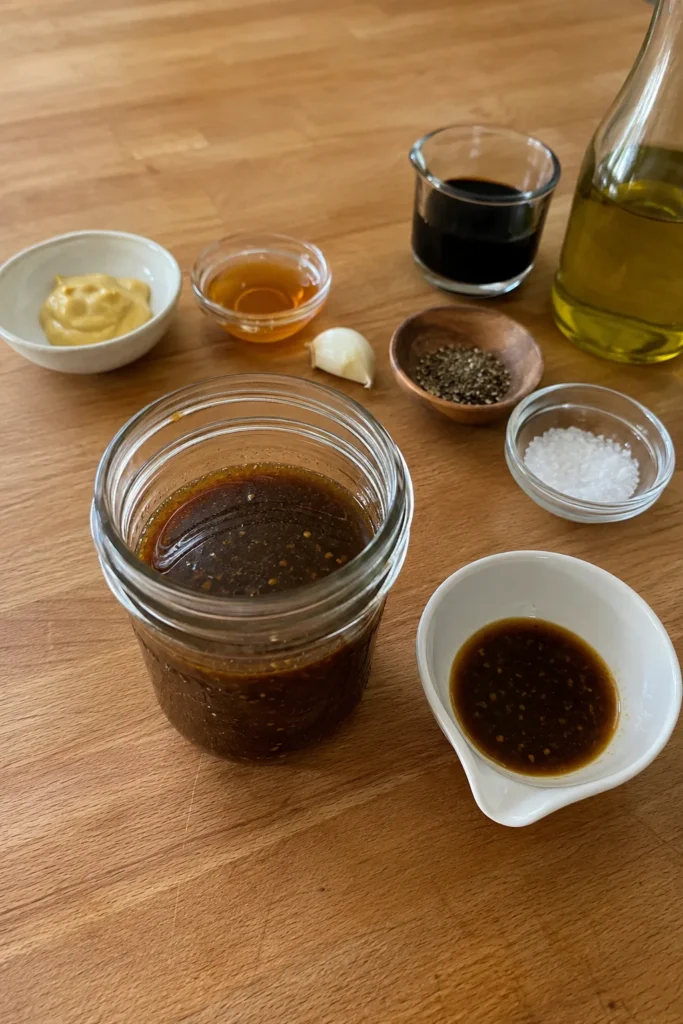
Ingredients and Why They Matter
Use a balsamic vinegar you enjoy tasting on its own. It should have a rounded grape flavor rather than an aggressively sour finish. Choose an olive oil that tastes fresh, not bitter or stale.
| Main Ingredient | Purpose | Nutrition Contribution | Best Substitution |
| Balsamic vinegar | Provides acidity, fruitiness, and color | Small amount of carbohydrate and natural sugar | Red wine vinegar for a sharper result |
| Extra-virgin olive oil | Creates body and carries flavor | Mostly unsaturated fat | Avocado oil for a milder flavor |
| Dijon mustard | Adds tang and supports emulsification | Small amount of sodium | Whole-grain mustard |
| Honey | Softens acidity | Added sugar and carbohydrate | Pure maple syrup |
| Fresh garlic | Adds savory aroma | Minimal calories | ¼ teaspoon garlic powder |
| Fine salt | Sharpens the overall flavor | Sodium | Reduce or omit as needed |
| Black pepper | Adds gentle warmth | Nutritionally minimal | A pinch of red pepper flakes |
Measure the oil and vinegar accurately the first time you make the recipe. Once you know the balance you prefer, small adjustments become easy. A darker, syrupy balsamic may need less honey, while a thinner, sharper bottle may benefit from the full amount. Always taste before adding extra salt because Dijon mustard varies by brand.
For one batch, use ¼ cup balsamic vinegar, 2 teaspoons Dijon mustard, 2 teaspoons honey, 1 small grated garlic clove, ½ teaspoon fine salt, ¼ teaspoon black pepper, and ½ cup extra-virgin olive oil.
How to Make Balsamic Vinaigrette
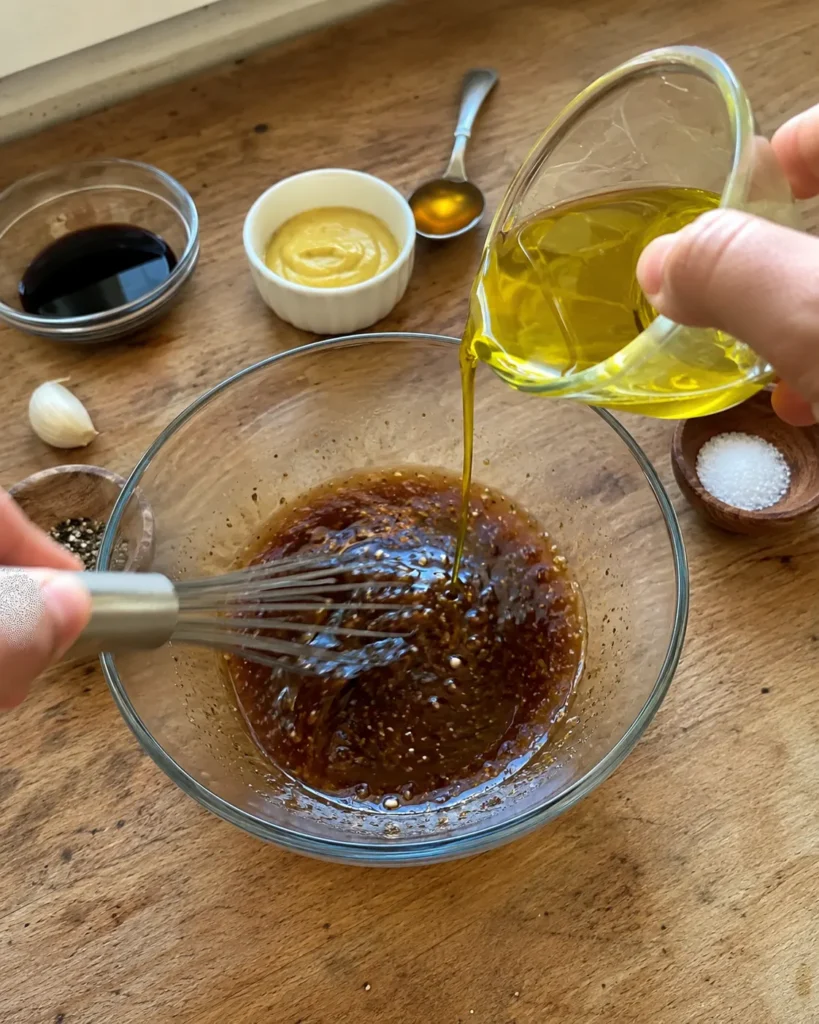
- Build the flavor base. Add the balsamic vinegar, Dijon, honey, grated garlic, salt, and black pepper to a medium bowl or lidded jar. Whisk or shake until the honey and salt dissolve.
- Add the oil gradually. While whisking, pour in the olive oil in a thin stream. Slow addition creates a smoother, more unified texture.
- Check the appearance. The finished Balsamic Vinaigrette should look glossy and slightly thicker than plain oil. A few tiny bubbles are normal. Wide oil streaks mean it needs another vigorous whisk or shake.
- Taste and adjust. Add ½ teaspoon honey if it is too sharp, 1 teaspoon vinegar if it tastes flat, or a little water for a thinner consistency.
- Rest briefly. Let the dressing stand for five minutes so the garlic can soften into the vinegar. Shake or whisk once more before serving.
[IMAGE 2: Close view showing the glossy, lightly thickened texture after whisking.]
Tips, Mistakes, and Substitutions
Start with room-temperature ingredients and grate the garlic finely. Taste the dressing with a lettuce leaf rather than a spoon because greens soften the acidity.
A common mistake is adding all the oil at once, which encourages quick separation. Another is over-sweetening before tasting the vinegar. Brands vary, so adjust gradually.
For a vegan Balsamic Vinaigrette, replace honey with maple syrup. Whole-grain mustard creates a rustic texture; smooth Dijon gives a more even emulsion. Avocado oil produces a milder flavor. Add fresh herbs only when you plan to use the dressing promptly.
Serving Ideas, Variations, Storage, and Reheating
Toss the dressing with romaine, spinach, arugula, tomatoes, cucumbers, roasted beets, pears, apples, feta, goat cheese, walnuts, or pecans. For a warm meal, drizzle it over Sheet Pan Gnocchi Broccoli after roasting; the acidity brightens the Parmesan and caramelized broccoli.
It also makes a fresh side salad that cuts through the richness of Corned Beef Au Gratin Potato. For sandwiches or wraps, use a thin drizzle of this dressing or choose 5-Minute Avocado Mayo when you want a creamier condiment.
Try one mashed strawberry, 1 tablespoon chopped basil, or 1 tablespoon Greek yogurt for a fruitier, herbal, or creamy variation. As a marinade, coat chicken or vegetables lightly.
Store Balsamic Vinaigrette in a clean, airtight jar in the refrigerator at 40°F or below. Because this version contains fresh garlic in oil, use it within four days. The National Center for Home Food Preservation warns that homemade garlic-in-oil mixtures should not be kept at room temperature and recommends no more than four refrigerated days.
Olive oil may thicken when chilled. Let the jar stand for 10–15 minutes, then shake well. No reheating is required. Discard it if you notice mold, gas, or an unusual odor.
Nutrition and Dietary Notes – Balsamic Vinaigrette
Nutrition values are estimates based on the listed ingredients, yield, and assumed serving size. Values vary according to brands, substitutions, and portion size.
One 1-tablespoon serving of Balsamic Vinaigrette provides approximately 90 calories, 0 grams protein, 2 grams carbohydrates, 0 grams fiber, 9 grams total fat, 1.3 grams saturated fat, 2 grams total sugars, about 1 gram added sugar, and 110 milligrams sodium. The estimate assumes 12 servings and honey as the sweetener. Ingredient composition can be checked through USDA FoodData Central, the USDA’s food-composition database.
Olive oil supplies nearly all the fat and calories. Vinegar and honey provide most of the carbohydrate and sugar, while salt and Dijon provide most of the sodium. This is a condiment, so the meal’s nutrition depends on what accompanies it.
To reduce sodium, use ¼ teaspoon salt. To reduce added sugar, use 1 teaspoon honey and expect a sharper finish. Add beans, lentils, whole grains, nuts, chicken, or tofu for more fiber or protein.
The recipe is naturally free from dairy, eggs, wheat, peanuts, tree nuts, fish, shellfish, and sesame when the selected mustard is also free from those ingredients. Always verify package labels for cross-contact or added allergens.
Frequently Asked Questions – Balsamic Vinaigrette
Why does my dressing separate?
Temporary separation is normal because oil and vinegar naturally pull apart. Dijon helps slow that separation, but the jar may still need shaking before each use.
Can I make Balsamic Vinaigrette without mustard?
Yes. Leave it out and whisk thoroughly before serving. The flavor will be simpler, and the dressing will separate faster because mustard helps hold the mixture together.
Is balsamic glaze the same as balsamic vinegar?
No. Balsamic glaze is reduced and often sweetened, so it is thicker and sweeter. Using it in place of vinegar can make this formula heavy and overly sweet.
Can I freeze the dressing?
Freezing is possible, but the texture may become uneven after thawing. Refrigerating a small batch for up to four days gives better flavor and consistency.
How much dressing should I use per salad?
Begin with 1 tablespoon per two cups of greens, toss, and add more only if needed.
Final Thoughts – Balsamic Vinaigrette
This Balsamic Vinaigrette is a small recipe with broad usefulness: bright enough for leafy salads, rich enough for roasted vegetables, and flexible enough to adjust with herbs, fruit, or a creamier ingredient. Keep the base ratio nearby, taste before serving, and let the food you are dressing guide the final balance.
Print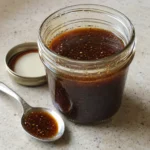
Balsamic Vinaigrette
- Prep Time: 5 minutes
- Cook Time: 0 minutes
- Total Time: 5 minutes
- Yield: ¾ cup, approximately 12 tablespoons 1x
- Category: Sauces and Dressings
- Method: Whisking
- Cuisine: American
Description
A smooth homemade balsamic vinaigrette made with balsamic vinegar, extra-virgin olive oil, Dijon mustard, honey, garlic, salt, and pepper. It is tangy, lightly sweet, and ready in five minutes.
Ingredients
¼ cup balsamic vinegar
2 teaspoons Dijon mustard
2 teaspoons honey
1 small garlic clove, finely grated
½ teaspoon fine salt
¼ teaspoon freshly ground black pepper
½ cup extra-virgin olive oil
Instructions
1. Add the balsamic vinegar, Dijon mustard, honey, garlic, salt, and black pepper to a medium mixing bowl or tightly sealed jar.
2. Whisk or shake until the honey and salt have dissolved.
3. While whisking continuously, slowly pour in the extra-virgin olive oil in a thin stream.
4. Continue whisking until the vinaigrette looks glossy, evenly blended, and lightly thickened.
5. Taste and adjust with a small amount of additional honey, balsamic vinegar, salt, or water if needed.
6. Let the vinaigrette stand for 5 minutes, then whisk or shake again before serving.
Notes
Replace the honey with pure maple syrup for a vegan version.
Use whole-grain mustard for a more rustic texture.
Add water 1 teaspoon at a time if you prefer a thinner consistency.
Natural separation is normal, so shake or whisk the vinaigrette before every use.
Store the vinaigrette in a clean, airtight jar in the refrigerator at 40°F or below for no more than 4 days.
Do not store homemade vinaigrette containing fresh garlic and oil at room temperature.
Nutrition
- Serving Size: 1 tablespoon
- Calories: 90 kcal
- Sugar: 2g
- Sodium: 110mg
- Fat: 9g
- Saturated Fat: 1.3g
- Unsaturated Fat: 7.7g
- Trans Fat: 0g
- Carbohydrates: 2g
- Fiber: 0g
- Protein: 0g
- Cholesterol: 0mg