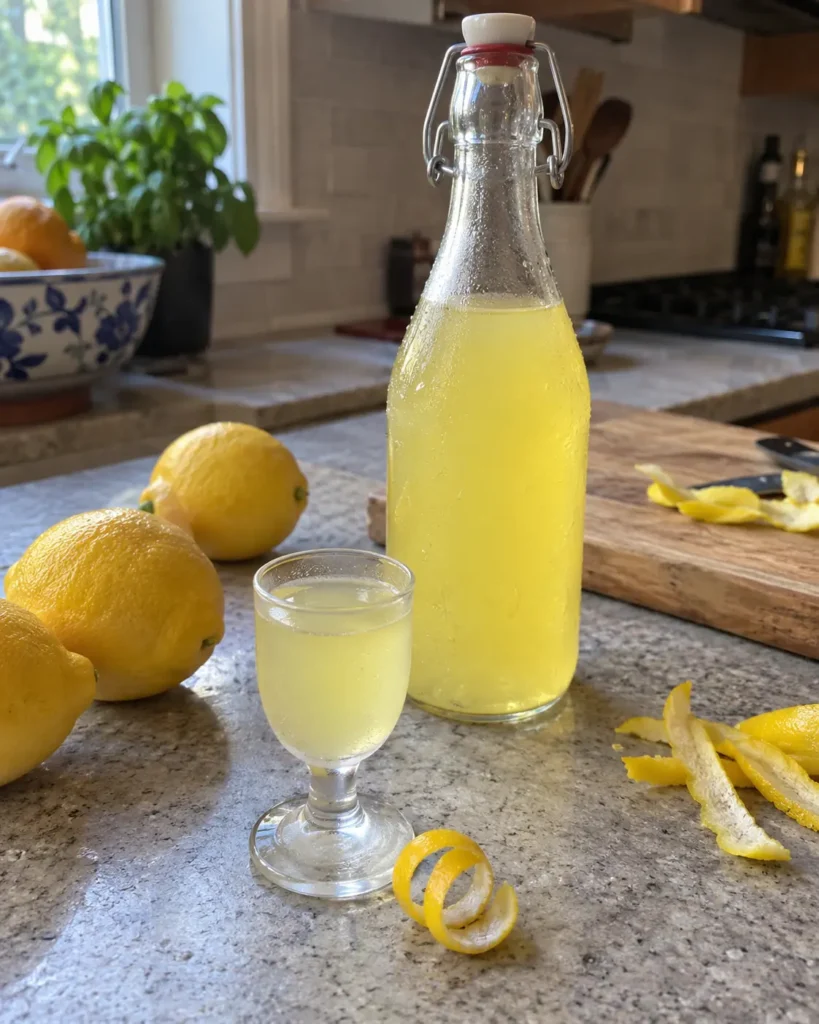
Homemade Limoncello is a bright Italian-style lemon liqueur made by steeping fresh lemon zest in vodka, then balancing it with cooled sugar syrup. It takes little hands-on work, but the slow infusion creates a lemon aroma and mellow finish that a rushed version cannot mimic.
Serve it ice-cold after dinner or use a small pour in a lemony dessert. Save or print this recipe before you start so the timing, straining, and bottling steps are easy to follow.
Quick Recipe Snapshot
| Detail | Information |
|---|---|
| Prep time | 25 minutes |
| Cook time | 5 minutes |
| Total time | 10 days, 25 minutes |
| Servings | About 26 |
| Serving size | 2 fl oz |
| Difficulty | Easy |
| Cooking method | Infusing and simmering |
| Flavor | Sweet, vivid lemon, gently warming |
| Texture | Smooth, light-bodied, sometimes softly cloudy |
| Best for | Gifts, dinner parties, summer sipping |
Table of Contents
Why You’ll Love This Homemade Limoncello
- Three basic ingredients create a polished, gift-worthy drink.
- The lemon flavor comes from zest, so it tastes fragrant rather than sharp like lemonade.
- Most of the calendar time is hands-off infusing and resting.
- You can adjust the sweetness slightly without changing the method.
- A chilled bottle makes an easy finish for a dinner party or holiday dessert table.
Ingredients and Why They Matter
The ingredient list is short, which makes each choice noticeable. Choose firm, fragrant lemons with unblemished skins; since the peel carries the flavor, unwaxed organic lemons are especially helpful when available. Wash and dry every lemon well before zesting, following the FDA’s guidance for cleaning fresh produce.
| Main Ingredient | Purpose | Nutrition Contribution | Best Substitution |
|---|---|---|---|
| Fresh lemons | Zest supplies aromatic oils and color | Small traces of citrus compounds | Meyer lemons for a softer floral note |
| 100-proof vodka | Extracts lemon oils and provides structure | Alcohol calories | 80-proof vodka; flavor will be a little lighter |
| Granulated sugar | Balances bitterness and builds body | Added sugars, carbohydrates | Cane sugar |
| Water | Turns sugar into a smooth syrup | None | Filtered water |
| Lemon peel, without pith | Keeps the infusion vivid rather than bitter | Negligible | Use a sharp vegetable peeler for clean strips |
For this batch, you need zest from 10 lemons, one 750 ml bottle 100-proof vodka, 2 cups granulated sugar, and 2½ cups water. Avoid lemon juice, lemon extract, or strips with thick white pith: they change the clean, fragrant character of Homemade Limoncello and can introduce bitterness.
How to Make Homemade Limoncello
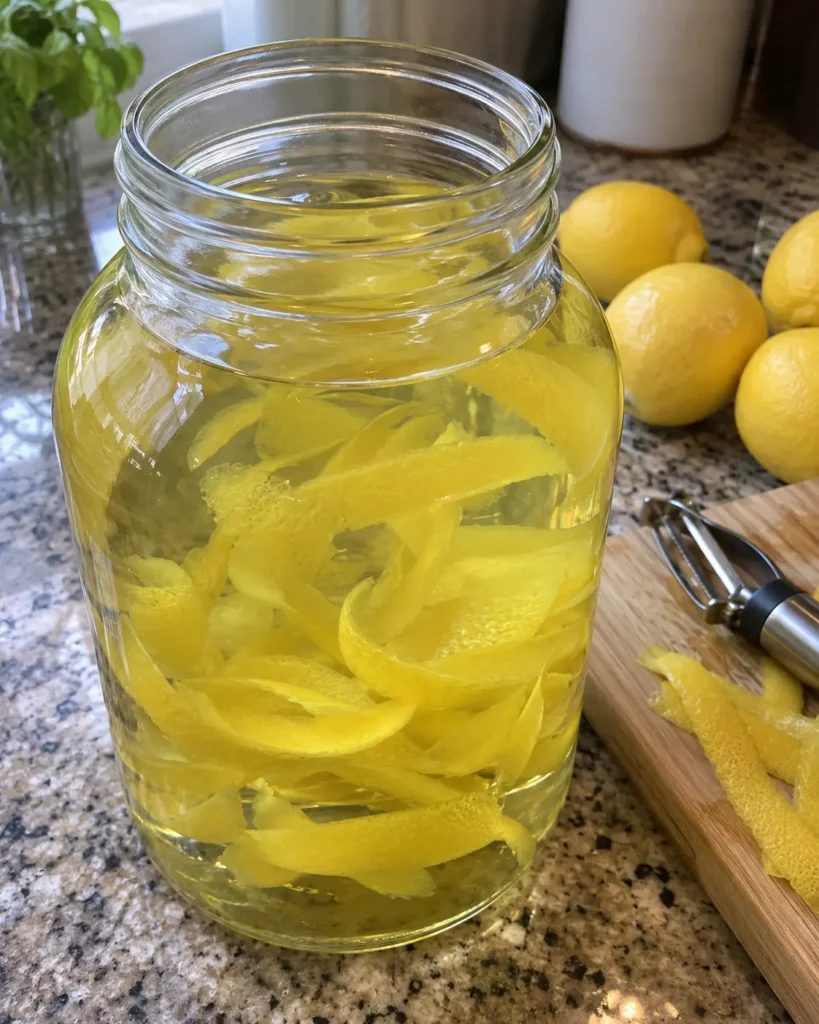
- Prepare the lemons. Wash and dry 10 lemons. Use a vegetable peeler to remove only the yellow outer peel in wide strips. Leave the white pith behind; it is the main source of bitterness.
- Start the infusion. Put the peel in a clean, dry 2-quart glass jar and pour in the vodka. Seal the jar and store it in a cool, dark spot for 10 days. Give it a gentle swirl once daily if you remember, but do not worry if you miss a day.
- Check the aroma. After 10 days, the liquid should be golden yellow and smell intensely of lemon peel, not harsh alcohol. Strain it through a fine-mesh sieve lined with a coffee filter or cheesecloth. Do not press the peels, which can push bitter sediment through the filter.
- Make the syrup. Combine the sugar and water in a saucepan over medium heat. Stir for about 3–5 minutes, just until the sugar dissolves and the syrup looks clear. Do not boil aggressively. Cool completely; warm syrup can dull the fresh citrus perfume and evaporate a little alcohol when mixed in.
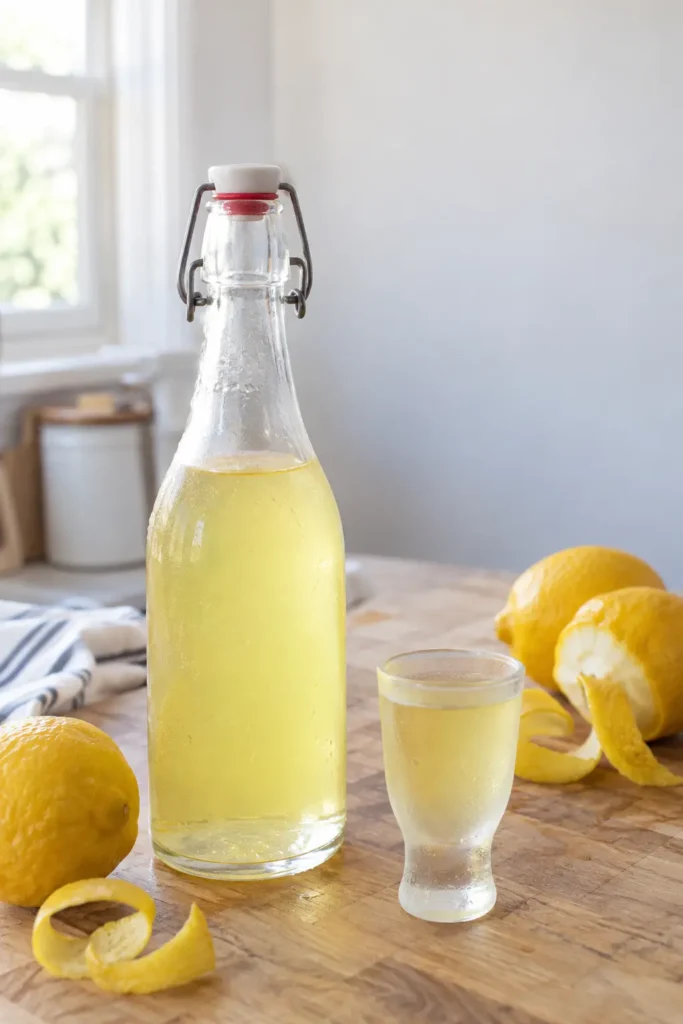
- Blend and rest. Stir the cooled syrup into the strained infusion, then divide Homemade Limoncello among clean bottles. Cap and refrigerate for at least 3 days, or up to 1 week, before serving. A faint cloudiness is normal when the lemon oils meet diluted alcohol.
Tips, Mistakes, and Substitutions
Keep the jar and bottles clean and fully dry. For the clearest result, strain twice: once through a sieve and once through a coffee filter.
The most common mistake is peeling too deeply. Yellow zest brings citrus oil; the spongy white layer brings a lingering bitterness that extra sugar cannot truly hide. If using 80-proof vodka, keep the same amount but expect a slightly gentler lemon aroma. You can reduce the sugar to 1¾ cups for a less-sweet batch, although the liqueur will feel thinner and more boozy.
Do not heat the vodka or leave the jar in direct sun. Homemade Limoncello is finished when it smells lemon-forward, the syrup is incorporated, and the bottled drink has rested cold long enough for the flavors to settle.
Serving Ideas and Variations
Serve Homemade Limoncello straight from the freezer in small chilled glasses after a rich meal. It also works with sparkling water and ice, or as a bright accent in a prosecco spritz. Start with a small pour; alcohol content varies with ingredients and portion size.
For a dessert pairing, spoon a little over berries or offer it beside this Chocolate Kahlua Trifle for a coffee-and-citrus finish. Its lemon brightness also contrasts nicely with the warm spice and chocolate in these Pumpkin Chocolate Chip Cookies.
For variations, add one small vanilla bean during the infusion, replace two lemons with two limes, or use Meyer lemons for a softer profile. Keep additions modest so lemon remains the lead flavor.
Storage, Freezing, and Reheating – Homemade Limoncello
Store Homemade Limoncello in tightly sealed bottles in the refrigerator for up to 3 months for its freshest flavor. The freezer is even better for serving: the alcohol and sugar keep it pourable, while the cold softens the sweetness and makes the lemon aroma feel crisp. There is no reheating step.
Use clean bottles, label each one with the date, and keep it away from children and anyone who should not consume alcohol. If a bottle develops an unusual odor, visible mold, or unexpected fizzing, discard it. For practical alcohol-serving context, see the CDC’s overview of standard drink sizes.
Nutrition and Dietary Notes
Nutrition values are estimates based on the listed ingredients, yield, and assumed serving size. Values vary according to brands, substitutions, and portion size.
With a 26-serving yield, one 2-fluid-ounce serving of Homemade Limoncello is estimated at about 160 calories, 20 grams carbohydrates, and 19 grams added sugar. It provides essentially no protein, fat, fiber, sodium, or meaningful vitamins and minerals. Sugar syrup supplies nearly all carbohydrates and added sugar, while vodka supplies most remaining calories through alcohol. This is an alcoholic after-dinner drink, not a meal or hydration beverage.
| Nutrient | Estimated Amount per Serving | Main Source |
|---|---|---|
| Calories | About 160 kcal | Alcohol and sugar |
| Protein | 0 g | — |
| Carbohydrates | About 20 g | Sugar syrup |
| Fiber | 0 g | — |
| Total sugars | About 19 g | Sugar syrup |
| Added sugars | About 19 g | Granulated sugar |
| Total fat | 0 g | — |
| Saturated fat | 0 g | — |
| Sodium | 0–5 mg | Ingredients vary |
| Potassium | Trace | Lemon zest |
For lighter sweetness, use 1¾ cups sugar; expect a firmer edge and less syrupy body. A 1-ounce pour is a smaller portion. This recipe is naturally gluten-free and dairy-free, but it contains alcohol. Check flavored vodka labels for added ingredients or allergen statements.
Frequently Asked Questions – Homemade Limoncello
Can I use regular 80-proof vodka?
Yes. Homemade Limoncello made with 80-proof vodka is still delicious, though it may have a slightly softer citrus aroma and lower final strength than a 100-proof batch.
Why is my limoncello cloudy?
That soft cloudiness is usually normal. Lemon oils become suspended when the sweet syrup dilutes the alcohol, especially after chilling. Strain again only if you see peel particles or sediment.
How long should Homemade Limoncello infuse?
Ten days gives a reliable, lemon-forward flavor. A shorter infusion can taste thin, while a much longer infusion may pull more bitterness if pith is present.
Can I give it as a gift?
Yes. Bottle Homemade Limoncello in clean, sealed glass bottles, label the date and alcohol content estimate, and give it only to adults of legal drinking age in your location.
Does homemade limoncello need to be refrigerated?
Refrigeration preserves the freshest lemon flavor, and freezer storage gives the best serving texture. Keep it sealed and cold after adding the syrup.
Final Thoughts – Homemade Limoncello
Homemade Limoncello rewards patience more than technique. Peel only the yellow zest, let the vodka draw out the lemon oils slowly, and give the finished bottles a few cold days to settle into their bright, smooth character.
Print
Homemade Limoncello
- Prep Time: 25 minutes
- Cook Time: 5 minutes
- Total Time: 18745 minutes
- Yield: About 1.6 liters / 26 servings 1x
- Category: Beverage
- Method: Infusing and simmering
- Cuisine: Italian-inspired
Description
A bright Italian-style lemon liqueur made by infusing lemon peel in vodka, then blending it with cooled simple syrup.
Ingredients
Zest of 10 unwaxed lemons, yellow peel only
750 ml 100-proof vodka
2 cups granulated sugar
2½ cups water
Instructions
1. Wash and dry lemons. Peel off only the yellow zest.
2. Add zest and vodka to a clean, dry jar. Seal and infuse in a cool, dark place for 10 days.
3. Strain the infusion without pressing the peels.
4. Heat sugar and water over medium heat for 3–5 minutes, stirring until dissolved. Cool completely.
5. Stir syrup into the strained infusion. Bottle, seal, and refrigerate for at least 3 days before serving cold.
Notes
Do not include white pith. Cloudiness after adding syrup or chilling is normal.
Refrigerate tightly sealed bottles for up to 3 months for best flavor.
Freeze tightly sealed bottles for serving; the limoncello should remain pourable.
Nutrition
- Serving Size: 2 fl oz
- Calories: 160 kcal
- Sugar: 19g
- Sodium: 5mg
- Fat: 0g
- Saturated Fat: 0g
- Unsaturated Fat: 0g
- Trans Fat: 0g
- Carbohydrates: 20g
- Fiber: 0g
- Protein: 0g
- Cholesterol: 0mg